AI Workflow Automation (also known as Cognitive Automation or Hyper-automation) refers to the use of artificial intelligence (AI), machine learning (ML), and autonomous software agents to design, execute, and optimize business processes with minimal human intervention. In the 2026 fiscal year, the discipline has evolved from simple rule-based "If-This-Then-That" (IFTTT) sequences to Agentic Workflows, where AI entities—specifically Zoho Zia Agents—possess the reasoning capabilities to handle multi-step tasks, navigate software interfaces, and make contextual decisions. For organizations partnered with Erphub, this represents a transition from "Digitization" to "Autonomous Orchestration," enabling a level of operational elasticity that was previously unattainable.
The trajectory of business automation began with Robotic Process Automation (RPA) in the 2010s, which focused on "screen scraping" and mimicking repetitive human clicks. However, RPA was fragile; a minor UI change would break the workflow. By 2024, Generative AI introduced the ability to create content and summarize data, but it lacked the "agency" to act on those insights.
Entering 2026, we have reached the era of Agentic AI. According to Gartner’s 2026 Tech Predictions, over 40% of enterprise projects will fail if they continue to automate "broken" legacy processes rather than redesigning them for an AI-native environment. Zoho Corporation has responded to this shift by releasing the Zoho One 2026 Bundle, which replaces isolated app silos with a unified "Unified Intelligence" framework. This shift allows a business to deploy "Digital Employees" that live within the CRM, Books, and Desk modules, working 24/7 to maintain data integrity and customer engagement.
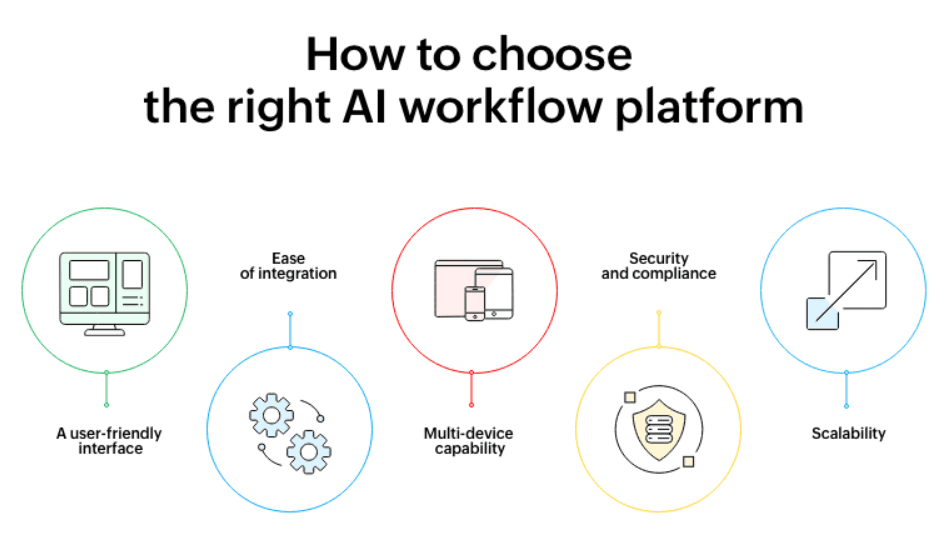
Unlike competitors who rely solely on third-party models like OpenAI or Gemini, Zoho has introduced Zia LLM, a suite of proprietary Large Language Models trained on enterprise-specific datasets. These models are deployed in three sizes: 1.3B, 2.6B, and 7B parameters. This "Right-Sized" approach allows businesses to balance accuracy and compute cost. For instance, a simple email summarization task might run on the 1.3B model (low latency, low cost), while a complex financial audit would trigger the 7B model. This architecture ensures that Erphub clients do not face the "Inference Economics" crisis, where monthly AI API bills spiral out of control.
Zia Agent Studio and the Agent Marketplace
The Zia Agent Studio is the centerpiece of 2026 automation. It allows business users to build, test, and deploy autonomous agents using natural language. Instead of writing code, a user might state: "Create a Sales Agent that qualifies leads from LinkedIn, checks our current inventory in Zoho Inventory, and sends a personalized quote via Zoho Sign." The studio provides over 700 pre-configured actions across the Zoho suite. Furthermore, the Zoho Agent Marketplace allows Erphub to provide "Ready-to-Use" micro-agents specifically tuned for niche industries like real estate, healthcare, or logistics.
The "Spaces" and "Zia Hubs" Framework
In 2026, Zoho One has moved away from the "Grid of Apps" to Spaces. A Space is a contextual work zone (e.g., "The Revenue Space") that pulls in widgets, data streams, and Zia Agents from across the ecosystem. Within these spaces, Zia Hubs act as pre-built automation libraries. These hubs can track supply chain disruptions in real-time and automatically suggest alternative vendors or shipping routes, effectively acting as a "Self-Healing" business system.
By 2026, "Lights-Out Operations"—where specific backend processes run entirely without human oversight—has become a competitive necessity. Research from McKinsey indicates that companies employing AI-driven "Next Best Action" initiatives have seen a 20% reduction in churn and a 25-40% reduction in low-value manual tasks.
Table 1: Automation Evolution Comparison (Legacy vs. 2026 Model)
Feature | Legacy Automation (RPA) | 2026 AI Agentic Automation (Zoho) | Strategic Benefit |
Logic Type | Rule-based (Rigid) | Context-aware (Reasoning) | Handles exceptions without breaking. |
Data Handling | Structured (Excel/CSV) | Unstructured (PDFs, Images, Voicemail) | Automates 100% of business inputs. |
Scaling | Vertical (More servers/licenses) | Elastic (Autonomous task agents) | Zero-marginal cost for scaling. |
Interactivity | UI Triggers | Natural Language & Voice | Drastic reduction in training time. |
Maintenance | High (Breaks with UI updates) | Low (Self-learning from data shifts) | Sustainable "Data Hygiene." |
Customer and Employee Experience (CX/EX)
In 2026, the "personalize or perish" mandate is in full effect. Gartner predicts that 80% of customer interactions will be mediated by multi-agent AI. In the Zoho ecosystem, this is manifested through the Zoho Desk Answer Bot, which has evolved from a simple FAQ search to a resolution agent. It can now identify customer sentiment (formal, casual, or frustrated), retrieve their transaction history from Zoho Books, and issue a refund or discount code autonomously, only involving a human agent for complex emotional triaging.
For employees, the benefit is the elimination of "Digital Drudgery." Zoho Projects now features AI-driven resource leveling, which automatically redistributes tasks when it detects a team member is reaching burnout. This "Proactive EX" (Employee Experience) is a core focus for Erphub, as it directly correlates with higher retention and lower recruitment costs.
Within Zoho CRM and Zoho Analytics, Zia constantly monitors data inflow. If lead generation drops by 15% on a Tuesday, or if an unusual spike in "Refund Requests" occurs in Zoho Books, Zia doesn't just send an alert—it performs a root-cause analysis. It might identify that a recent website update broke the checkout form and automatically notify the web development team with a screenshot of the error, as documented in IBM’s 2026 Tech Insights.
Automated Data Enrichment
Data decay is a primary cause of "Information Entropy." In 2026, Zoho Zia performs Continuous Data Enrichment. When a new lead enters the system, Zia scans the public web, LinkedIn, and financial registries to fill in missing fields—industry size, latest news, and key decision-makers—ensuring the sales team always works with high-fidelity information.
Cognitive Offloading via "Ask Zia"
The interface of the future is conversational. Through Ask Zia, a CEO can perform complex cross-departmental queries such as: "Show me the correlation between marketing spend in Q3 and the average resolution time in customer support for our Tier 1 clients." Zia navigates the silos of Zoho Campaigns, Zoho Analytics, and Zoho Desk to present a visual dashboard in seconds. This eliminates the need for manual report generation, allowing leadership to focus on strategic pivots. Deploying AI in 2026 is no longer a matter of "turning on" a feature; it is an architectural redesign. Erphub serves as the strategic partner that ensures these tools are not just deployed, but orchestrated for maximum ROI.
The divide between the market leaders of 2026 and their competitors will be defined by their Automation Maturity. Those who view AI as a "chatbot" will be eclipsed by those who view it as a Workforce Multiplier. By leveraging the Zoho ecosystem's native AI agents and the strategic architectural expertise of Erphub, businesses can achieve a state of "Operational Excellence" where growth is a structured foundation for businesses, run through Zoho Solutions.